Mustang: A Journey of Beauty, Responsibility, and Reflection
Have you ever stood in Mustang and watched the sun rise over the rugged Himalayas? Felt the wind whisper through ancient monasteries? Gazed at the sacred Muktinath Temple, or explored the walled city of Lo Manthang, where history and spirituality echo through every alley?
If you have been to Mustang, then ask yourself:
Have you felt the awe of soaring peaks and desert-like valleys that seem to touch the sky?
Have you walked through the vibrant villages and felt the heartbeat Thakali culture?
Have you offered a prayer at Kagbeni Dham or watched pilgrims from across Asia reach Muktinath to seek blessings?
Mustang isn’t just pretty views, it’s an immersive journey through natural grandeur, deep spirituality, and living traditions that have survived for centuries. In recent years, thousands of people, both Nepali and foreigner, have visited Mustang. According to the district police office, Mustang welcomed 678,536 visitors between mid-July 2024 and mid-June 2025 – a 49% jump from the 454,326 recorded the previous year. Domestic arrivals rose by 52%, reaching 539,872, while foreign arrivals grew by nearly 40%, totaling 138,664 visitors from 72 countries.
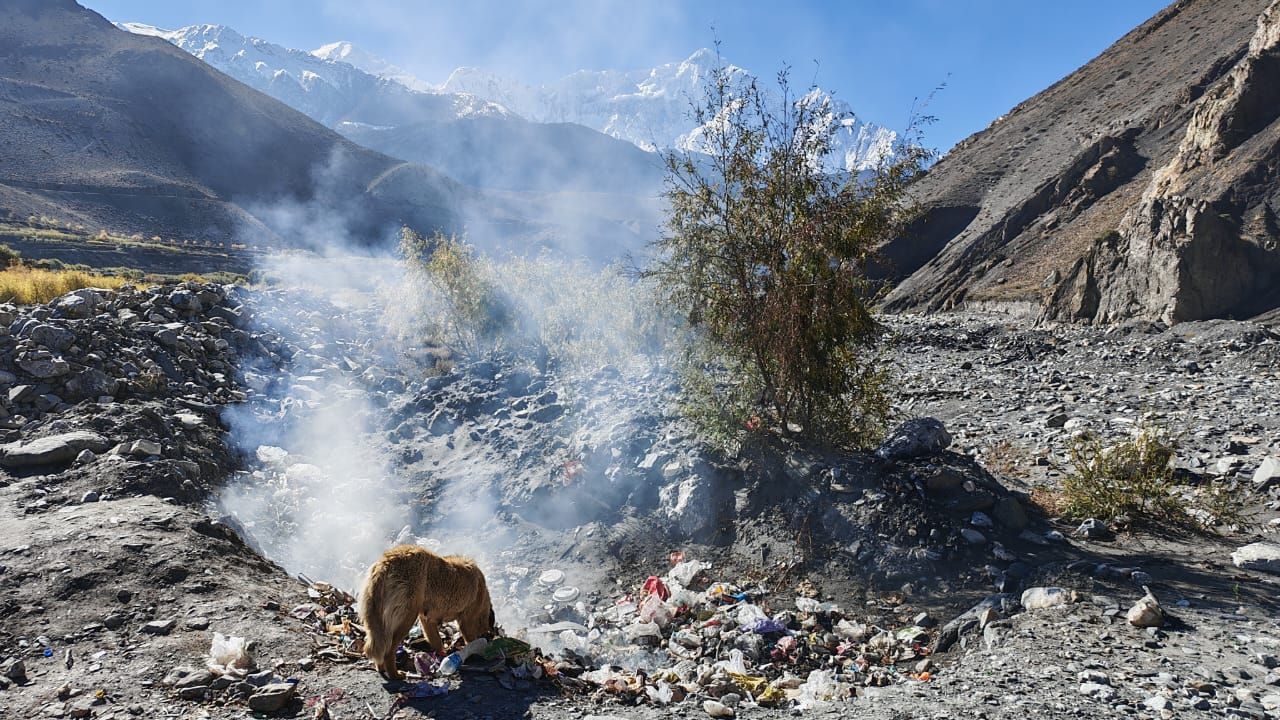
But while feeling the breeze of snow-capped mountains, have you ever seen the other side of Mustang? Garbage, plastics, wrappers, bottles and glasses, waiting to be cleared off. Have you ever walked through the waste disposal sites in the villages? Have you ever thought, what happens to the things we leave behind? Most of us use plastic bags and bottles while travelling. Have we ever paused to notice where that plastic goes once, we are done with it?
Many visitors adore the beautiful mountains, yet few see the less scenic side of tourism: the piles of plastic waste, metal cans, and non-biodegradable waste that accumulate along paths and near towns. With the increase in visitors in Mustang, the amount of waste has also increased. Locals and conservation groups have launched efforts to manage this very waste, collecting plastics, bottles, and metal garbage from trekking routes, hotels and settlements. Organizations like ICIMOD and CLEAN UP NEPAL are implementing awareness raising programs. The Annapurna Conservation Area Project (ACAP) is supporting communities in transporting 4,391 kgs of waste from Mustang to recycling centers in Pokhara in last six months.
But the challenges are still same. The fragile Himalayan environment doesn’t easily absorb waste, and improper disposal can harm water sources, soil quality, and wildlife, all in the shadow of legendary peaks like Nilgiri and Dhaulagiri.
Now, ask yourself again:
How would you feel if you were told that plastics you throw are burned in open areas near Mustang’s valleys and hillsides? How would you feel if you saw black smoke rising against the snowy slopes of Nilgiri mountain? These questions matter.
Tourism has brought growth and opportunities, but it has also strained the ability of high mountains like Mustang to handle waste sustainably. While campaigns by local authorities and the ACAP are helping, with community clean-ups and plastic reduction initiatives, a lot still depends on tourist behavior and responsibility.
Plastic bottles, bags, and non-biodegradable waste don’t just disappear, they linger, harming landscapes that have taken centuries to evolve. In most of the high mountains, waste is still piled up or burned in the open, polluting the air and harming delicate ecosystems.
What if Tourism Was Responsible? Imagine if every visitor asked:
Where will my waste go?
Am I carrying reusable bottles and bags?
Am I supporting local efforts to keep the place clean?
Am I leaving the place as beautiful as, or more beautiful than when I arrived?
This is what it means to be an eco-tourist: Supporting local waste management initiatives, reducing single-use plastics, respecting sacred sites and natural habitats, leaving only footprints behind and being more responsible towards their behavior.
So, next time you plan that trip to Mustang, ask yourself one last question:
Do you want to remember the beauty of its mountains and villages, or the waste left behind? Your choices matter. Choose to travel responsibly. Carry less plastic. Support local waste initiatives. Promote eco-tourism. And be the kind of traveler the mountains themselves would welcome back.
Because true adventure isn’t just about discovering new places, it’s about caring for them, so they remain just as magical for generations to come.
Blog written by Karuna Thapa, Project Coordinator of CLEAN UP NEPAL