From Vulnerability to Visibility: A Waste Worker’s Journey to Safety
June-5, 2026
Ms. Laxmi Katuwal, a 38-year-old resident of Pokhara Metropolitan City, originally from Dhading, lives in a rented house with her husband (45 years old), two daughters (22 and 18 years old), and a 20-year-old son. She has been actively engaged as a waste worker under Pokhara Metropolitan City’s waste management department.
Despite her important contribution to maintaining urban cleanliness, Ms. Katuwal had never received any formal training on Occupational Health and Safety (OHS) and, reproductive health. She had limited awareness regarding occupational risks and had long worked without adequate Personal Protective Equipment (PPE) sets. Working in her personal clothes often made her feel uncomfortable, unsafe, and less dignified. Her work environment remained hazardous, and her personal safety and social respect were often compromised, despite the critical nature of her role in waste management.
Under the recommendation of Pokhara Metropolitan City and through the project “Green Steps: Empowering Nepal through Waste Reduction Project,” she participated in a two-day training on Occupational Health and Safety and reproductive health. The training covered key topics including waste classification, plastic waste management, the 3R principles (Reduce, Reuse, Recycle), government social protection and civil registration systems, occupational hazards and preventive safety measures for waste workers, safe waste collection practices, sexual and reproductive health, personal hygiene, and the importance and use of PPE sets.
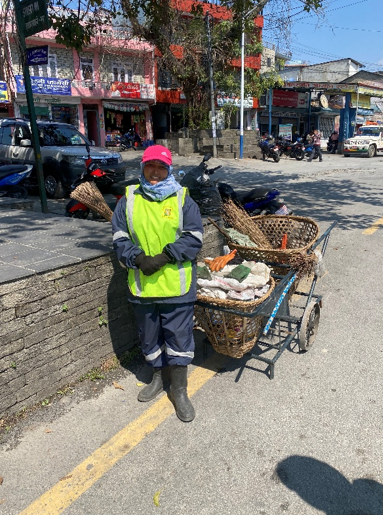
In addition to the training, she received a PPE set including a jacket and trousers, one box of masks, a pair of gloves and rubber gumboots along with awareness on their proper use and benefits during waste collection activities.
Following the intervention, Ms. Katuwal demonstrated improved knowledge and awareness of occupational safety and hygiene. She now maintains better personal hygiene both at home and at work and consistently applies the knowledge gained during the training. She has also shared her learning with her family, colleagues, and community members, contributing to wider awareness. With the use of PPE, she now feels safer and more respected in her workplace, and incidents of risk and discomfort have significantly reduced. Her confidence and dignity as a waste worker have notably improved, and she continues to contribute enthusiastically to waste management sector in Pokhara.
Occupational Health and Safety and, Reproductive Health training combined with the provision of essential protective equipment can significantly improve the well-being, dignity, and efficiency of waste workers. Continuous capacity building, regular refresher trainings, and consistent monitoring by the municipal authority are essential to sustain these improvements. Ensuring timely provision of PPE and addressing the evolving needs of waste workers will further strengthen occupational safety, promote social respect, and enhance the overall effectiveness of municipal waste management sector.